
Change Makers
The Strength That Holds Us Together: Gertrude Elion
RR
Ramon Robinson
March 11, 2026
2 min read
Her work would lead to breakthroughs that saved countless lives.
Some of the most life changing discoveries come from people who refuse to give up, even when doors are closed to them.
Gertrude Elion was one of those people.
Born in New York City in 1918, Elion developed an early interest in science after watching her grandfather suffer from cancer. His illness left a lasting impression on her and inspired her to pursue a career in medical research with the hope of helping others avoid the same suffering.
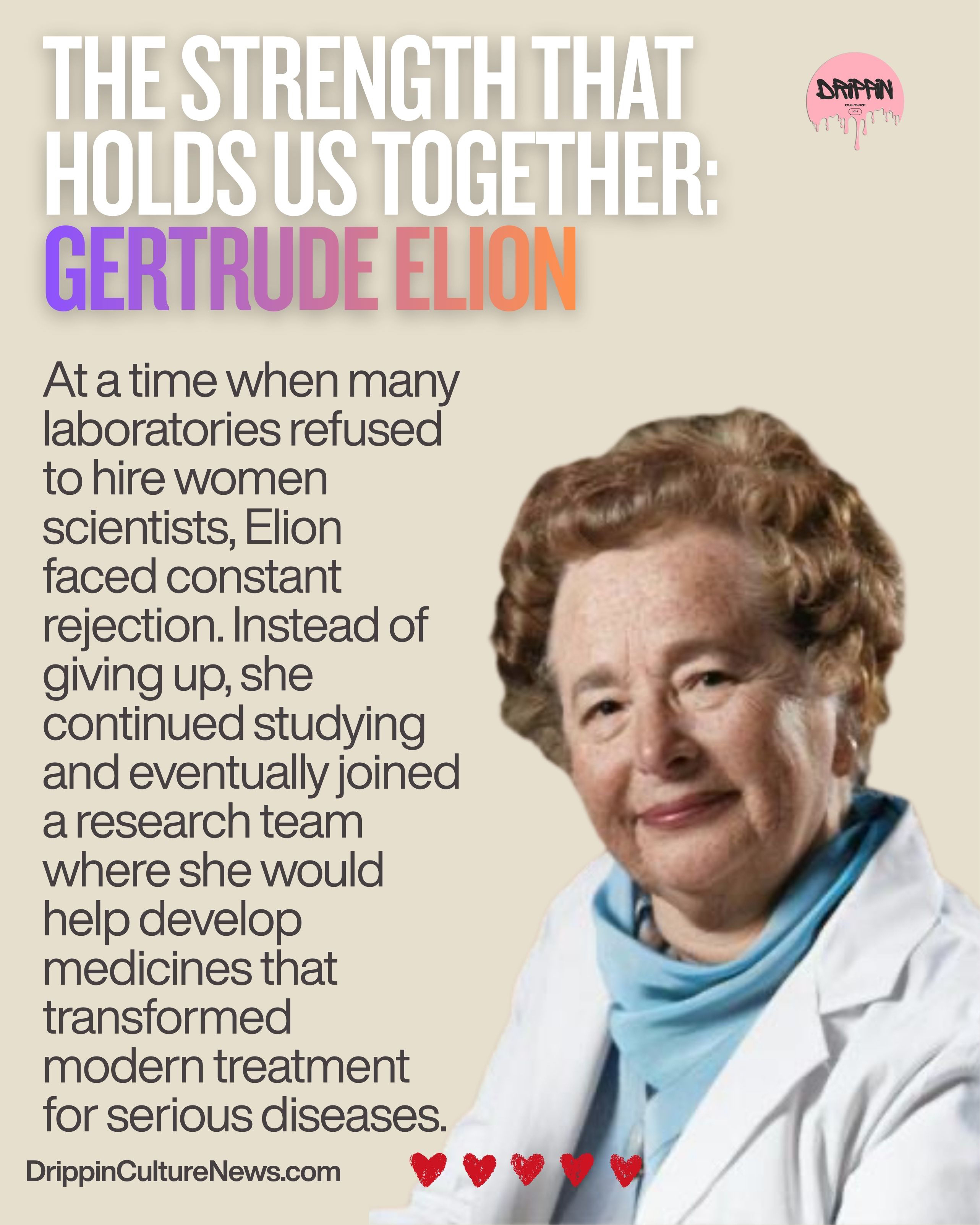
At a time when many laboratories refused to hire women scientists, Elion faced constant rejection. Instead of giving up, she continued studying and eventually joined a research team where she would help develop medicines that transformed modern treatment for serious diseases.
Her work would lead to breakthroughs that saved countless lives.
Did You Know: Her Research Helped Treat Leukemia
Gertrude Elion played a key role in developing drugs that helped treat leukemia, a type of cancer that affects blood cells.
Before these treatments were developed, leukemia was often considered almost always fatal, especially for children.
Elion’s research helped lead to medications that slowed the growth of cancer cells and gave doctors new ways to treat the disease.
These discoveries helped change leukemia from a nearly hopeless diagnosis into a condition that could often be treated successfully.
Did You Know: Her Work Made Organ Transplants Possible
One of the biggest challenges in organ transplantation is that the human body often rejects a new organ.
Gertrude Elion helped develop drugs that suppress the immune system, allowing the body to accept transplanted organs.
These medications made kidney transplants and other organ transplants far more successful, helping save the lives of patients who previously had few options.
Did You Know: She Helped Develop Many Important Medicines
Throughout her career, Gertrude Elion contributed to the development of several important drugs used to treat a variety of conditions.
These included treatments for leukemia, herpes infections, malaria, and autoimmune diseases.
Her research methods also changed the way scientists develop medications by focusing on understanding how diseases work at the molecular level.
A Life Devoted to Saving Lives
Gertrude Elion’s work helped transform modern medicine and improve the lives of millions of people around the world.
In 1988 she received the Nobel Prize in Physiology or Medicine for her contributions to drug development.
Despite the challenges she faced as a woman in science during her time, Elion remained focused on her mission to help people through research.
Her legacy continues every time a patient receives life saving treatment made possible by the discoveries she helped bring into the world.
Her story reminds us that persistence, curiosity, and compassion can change the course of human health.
React to this story
Share
Related Stories


Comments
RR
Written by
Ramon Robinson
Contributing writer at Drippin Culture, sharing stories that celebrate community and culture.